

Fiber Resources
Fiber Resources

Braided lines improve the performance of high-performance fibers by enhancing abrasion resistance, load distribution, and handling in demanding applications.

Learn why the D/d ratio is critical for rope life and safety. Discover recommended ratios for HMPE, Aramid, and LCP fibers and avoid premature failure.

Twisting aligns high-performance fiber filaments to improve cohesion, load sharing, and durability. Learn how twist level impacts strength, flexibility, and performance.

Technical fiber conversion calculator for engineers & purchasers. Convert denier, tex, dtex, tenacity, yields, and twist units quickly for aramid, UHMWPE, carbon, and more.

A technical comparison of para-aramid and meta-aramid fibers, including Kevlar®, Alkex® Technora®, and Nomex®. Understand their performance differences and where each fiber excels.

A comprehensive glossary of essential fiber and textile terminology used in high-performance applications. Quickly understand key definitions related to yarns, cords, braids, coatings, and advanced materials.

Compare Kevlar®, Technora®, Vectran™, Spectra®, UHMWPE and carbon fiber properties. Strength, modulus, elongation and creep in one high-performance fiber table.

Para-aramid and carbon fiber offer different advantages in advanced materials. Learn how these fibers compare in tensile strength, stiffness, weight, and durability.

UHMWPE and para-aramid are two of the strongest high-performance fibers. Learn how they compare in strength, heat resistance, creep, and durability.

The development of high-performance fiber products has revolutionized numerous industries, from construction and manufacturing to sports and safety equipment. Selecting the right high-performance fiber product for specific applications requires a comprehensive understanding of various parameters, including the fiber's properties, the environment it will be subjected to, the ideal fiber format, and the potential for enhancements through specialty coatings.

Tenacity and break strength are both measures used to evaluate the strength and performance of materials, particularly fibers. However, they represent slightly different aspects of a fiber's strength.
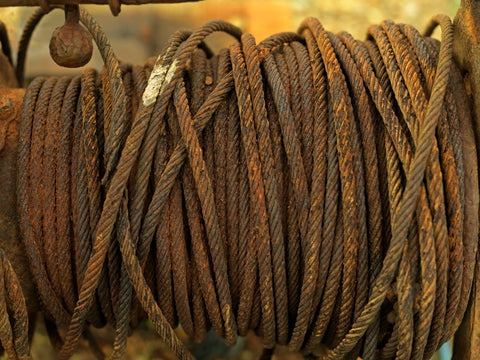
The adoption of high-performance synthetic fibers over metal wire rope or cable presents compelling technical advantages across multiple key areas. Firstly, these fibers offer remarkable corrosion resistance, a feature absent in metal counterparts.